What the Valuation Misses: A Standards Due Diligence Walkthrough for SME Acquisitions
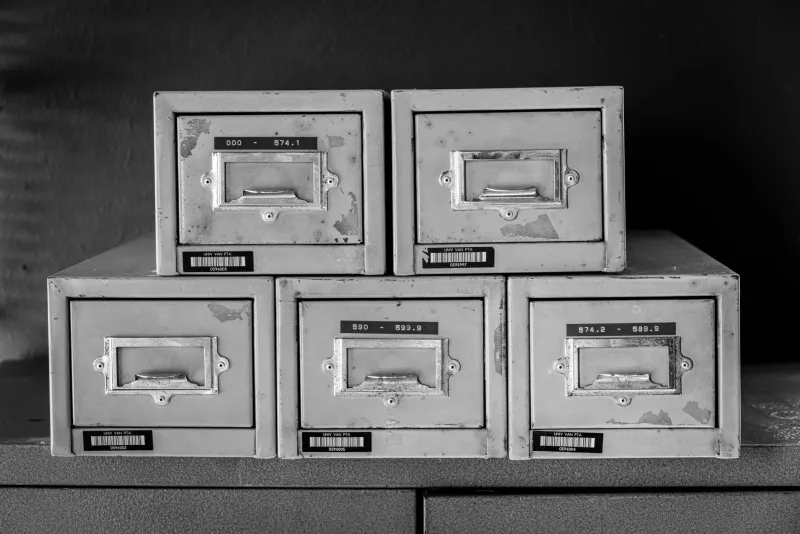
Acquisitions are usually framed around turnover, order books, plant and property. For a UK manufacturing SME, however, a substantial part of the inherited risk sits in a filing cabinet — or, increasingly, a document management system — that nobody has valued. Declarations of conformity, test reports, supplier approvals, committee memberships and transition plans are not peripheral paperwork. They are the evidence base on which the business asserts that its products meet the standards on which its customers, insurers and regulators rely.
BEMSC members involved in buying or selling a business have repeatedly found that the standards estate is where post-completion surprises accumulate. The purpose of this walkthrough is not to replace legal or technical advice. It is to give directors and standards leads a structured set of questions to ask before completion, and a practical basis for agreeing what happens afterwards.
Begin with the standards estate, not the balance sheet
A useful starting point is to ask what the target actually makes, imports or places on the UK market, and which standards each product family depends on. The answer should be documented, not inferred from the sales brochure. Request a product-by-product schedule showing the designated standard or specification claimed, the conformity route taken, the date of the most recent assessment and the identity of the person who signed it off.
Where the schedule does not exist, that absence is itself a finding. It may indicate a small business that has operated on customer goodwill and engineering judgement, or it may indicate a more serious gap in recorded evidence. Either way, the buyer needs to know before completion rather than after.
Declarations of conformity: the first paper trail
Declarations of conformity are often treated as administrative artefacts. In due diligence they should be treated as assertions with a date, a signatory and a technical file behind them. Check that each declaration matches the product actually supplied, that the standards cited are current for the relevant market, and that the signatory had authority to make the declaration.
For UKCA-marked goods, confirm that the technical documentation supports the claims made and that the responsible person arrangements are intact. Where CE marking continues to be used in permitted circumstances, establish the basis on which it is retained and whether the target has kept that basis under review. A declaration that has not been revisited since a standard was revised is not necessarily invalid, but it deserves a documented explanation.
Test evidence and the question of custody
Test reports are frequently held by a former test house, a customer or an individual engineer who has since left. Establish who holds the originals, whether the reports relate to the current design, and whether any subsequent change — a material substitution, a supplier move, a software update — has invalidated the basis of the test.
Ask also about calibration and maintenance records for in-house test equipment. If the business relies on its own verification, the credibility of that verification depends on the equipment and the competence of those operating it. A buyer inheriting an unbroken calibration trail inherits something of real value; a buyer inheriting a gap inherits a retest programme.
Withdrawn standards: the inherited exposure
One of the most common post-completion discoveries is exposure to a standard that has been withdrawn or superseded. The target may have continued to manufacture to an older edition because a customer specified it, because the transition date was misunderstood, or because nobody owned the standards watch.
Due diligence should therefore include a review of the standards cited across the product range against their current status. For each superseded reference, record whether a transition plan exists, who agreed it, what the customer has been told and what remains outstanding. The buyer is not obliged to solve every legacy issue on day one, but the price and the integration plan should reflect the work required.
Supplier approvals that still hold
Approvals are not permanent. A supplier approved five years ago may have changed ownership, process, sub-tier sources or quality arrangements. Ask for the approval schedule, the basis of each approval and the date of the most recent verification. Where approvals rest on customer or third-party audits, confirm that the audit is still valid and that any findings have been closed.
This is also the point to examine the target's own position as a supplier. If key customers require notification of changes, the buyer needs to understand which changes the acquisition itself will trigger. A change of control, a site move or a revised quality system may each require customer approval before the first post-completion shipment.
Committee memberships and the human capital
Standards work is often carried by one or two individuals whose contribution is invisible in the accounts. Establish which committees, technical panels or industry bodies the target participates in, who attends, and whether that participation transfers with the business. A committee seat is not usually an asset on the balance sheet, but the knowledge and influence attached to it can be material.
Where the individual will leave, plan for continuity. Where they will stay, confirm that the membership arrangements permit the new entity to be represented. This is a small point with disproportionate consequences for a business that relies on early sight of revisions.
A practical sequence before completion
The work is best done in stages. First, request the product and standards schedule, declarations and technical files. Second, reconcile those documents against the actual product range and customer contracts. Third, review withdrawn-standard exposure and supplier approvals. Fourth, interview the people who hold the knowledge, including the quality lead, the technical signatory and anyone involved in external committees.
The output should be a short, evidence-based register: what is in place, what is missing, what is at risk and what it would cost to remedy. That register belongs in the negotiation, not in a post-completion apology.
After completion: a 100-day standards handover
Completion is not the end of diligence. Agree a handover period with named responsibilities, access to technical files, introductions to test houses and customers, and a joint review of open transition plans. Set a date by which the standards register will be re-baselined under the new ownership, and report progress to the board.
BEMSC's member resources and helpline can support that review, particularly where a buyer needs a second opinion on the status of a standard or the credibility of a transition plan. The central discipline is simple: treat the standards estate as part of the business being bought, with the same rigour applied to its evidence as to its accounts. The filing cabinet may not appear in the valuation, but its contents will shape the first year of ownership.