The Second Shift's Blind Spot: Holding Standards Discipline Beyond Core Hours
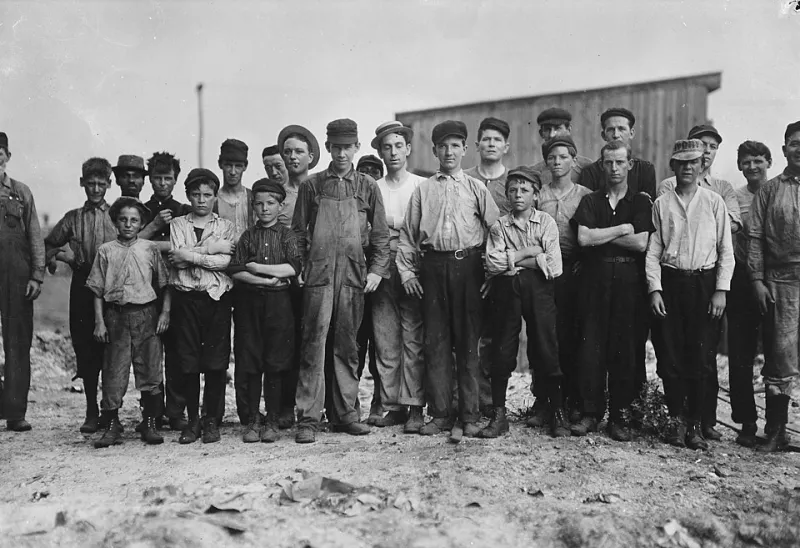
Photo: Lewis Hine, Public domain, via Wikimedia Commons
There is a particular kind of confidence that settles over a factory floor at eleven o'clock at night. The machines are running, the targets are close, and the people who would ordinarily ask the awkward question are at home. The work gets done. What is less certain is whether it gets recorded.
Standards discipline is, in most organisations, a daytime construct. Approval routes assume a supervisor within reach. Deviation authority assumes a quality function that can be consulted. Calibration schedules assume somebody who will notice that a gauge's label has quietly expired. None of these assumptions survives contact with a night shift, and fewer still survive a Sunday.
This is not an argument against out-of-hours production. It is an argument that the control system must be designed for the hours in which it will actually be used.
The procedure assumes daylight
Read a typical inspection and test plan and count the steps that require another person. Count the steps that require a signature from someone not on shift. Count the steps that require access to a document held in an office that is locked.
Now imagine that plan being executed at two in the morning on a Saturday, with a team of four and a delivery deadline at six. The steps have not changed. The conditions under which they must be executed have.
This mismatch is rarely the product of carelessness. It is the product of drafting. Procedures are written during normal hours, by people who work normal hours, and tested against scenarios that occur during normal hours. The night shift inherits a document designed for somebody else.
Where the control actually leaks
Four points recur across member operations.
Handover. The change of shift is the most exposed moment in a twenty-four-hour cycle. Information passed verbally and incompletely; a job partially complete; a query unresolved. The clause that governs the work does not travel with the work unless somebody makes it travel.
Informal change. A substitution made because the specified item was not in stores. A parameter adjusted because the first setting produced a suspect result. Small departures, made by competent people for sensible reasons — and, cumulatively, the largest single source of nonconformity in out-of-hours production.
Calibration. Equipment drawn from a cabinet, used, and returned without the label being read. Calibration status is a property that must be checked at the point of use, and at night there is often nobody to check it.
Access to the standard itself. A clause cannot govern a decision if the person making the decision cannot see it. A controlled copy behind a locked door, or a licence that restricts concurrent access, is a control in name only.
The handover is the hinge
If an organisation can improve one thing, it should be the handover. Not the length of the meeting, but the quality of the record. A note that names the job, the applicable clause, the stage reached, any outstanding verification and the person who authorised any departure gives the incoming shift something to work against.
The test of a good handover note is whether a competent person who was not present could pick up the job and know what conformity requires next. That is a higher bar than most notes clear, and it is the right one.
Writing authority down for the dark hours
Deviations happen out of hours because production must continue. Pretending otherwise produces a system that is quietly bypassed. The practical alternative is to name, in advance, who may authorise what between certain hours.
A workable structure has three tiers. Routine adjustments within a defined envelope — no authorisation beyond the operator's own competence, plus a note in the log. Departures from a specified method or material — authorised by the senior person on shift, recorded, and reviewed by the quality function on the next working day. Anything touching a safety-critical characteristic or a customer-witnessed hold point — no out-of-hours authority at all, with production held.
The third tier is the one that requires nerve. It is also the one that keeps the organisation out of difficulty. An authority that is never withheld is not an authority; it is a formality.
A shift-level routine
Four checks, performed at the start of every out-of-hours shift, cover most of the exposure:
- Confirm that controlled documents for the jobs in progress are physically or digitally available at the point of use.
- Confirm calibration status on every instrument the shift expects to use, and quarantine anything doubtful before work begins rather than after.
- Read the incoming handover for outstanding verifications and confirm ownership of each.
- Confirm who holds deviation authority for the shift, and record that name and contact route in the shift log.
The routine takes a matter of minutes. Its value lies less in the checks themselves than in the signal they send: that the clause remains in force after hours.
What the board should ask
Standards governance is often discussed at board level in terms of certification and audit outcomes. A more searching question is whether the management system was designed for the pattern of work the organisation actually runs. If production operates seven days a week and the quality function operates five, that gap is a governance issue, not a scheduling inconvenience.
Members examining this area are welcome to raise it through the BEMSC member helpline, and the theme will form part of the 2026 programme of member-hosted standards walkthroughs. The clause does not clock off. Neither, in a well-designed system, should the means of evidencing it.