The Standards File Before the Deposit: Used Machinery Due Diligence for UK Manufacturers
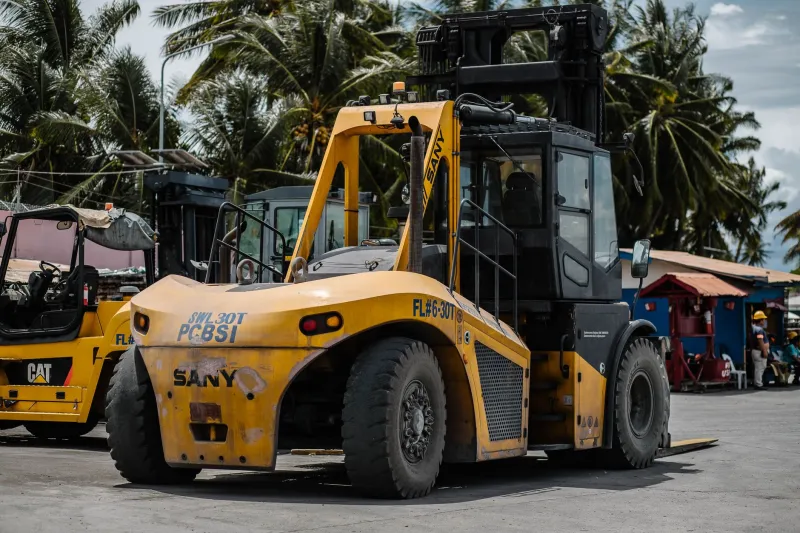
Second-hand industrial machinery has an obvious commercial appeal: shorter lead times, lower capital outlay and equipment that may already be proven in service. Yet the standards question is often deferred until the forklift is booked, the floor is cleared and the purchase order has been raised. By then, the buyer's leverage has usually gone. For UK small and medium-sized manufacturers, the more disciplined approach is to treat used-machinery buying as a standards due-diligence exercise from the first enquiry, not as a bargaining point at the end.
The purpose is not to turn every purchase into an engineering audit. It is to establish, before commitment, whether the equipment can be operated lawfully and safely in the buyer's premises, whether the necessary information exists, and whether any gaps are affordable to close. The checklist below is designed to be reused across dealers, auctions, insolvency sales and direct approaches from other manufacturers.
Begin with a document request, not a site visit
A useful habit is to ask for the standards file before arranging inspection. The response tells you a great deal about the seller and the machine. Request the declaration of conformity or declaration of incorporation, the marking photograph, the latest risk assessment, the operating manual, the maintenance schedule and any calibration or test records. Ask also for the machine's service history and the date it was last used in production.
Some sellers will have a complete file; many will not. The absence of documents is not automatically a reason to walk away, but it changes the nature of the negotiation. A machine without a traceable file is a machine whose compliance status must be established by the buyer, often at the buyer's cost.
Understand what the marking is telling you
Machinery supplied in Great Britain is subject to the Supply of Machinery (Safety) Regulations 2008, with UKCA marking and, where applicable, recognition of CE marking under the arrangements that have applied in recent years. Used machinery imported from outside the UK can raise additional questions about placing on the market and putting into service. Members should not rely on a badge alone. Look at the marking itself, its condition and its position; check that the manufacturer's name and address, machine designation, serial number and year of construction are present and consistent with the paperwork.
Where a declaration is provided, read it rather than filing it. Does it identify the correct machine? Is it signed and dated? Does it cite the designated standards used? If the declaration refers to an older edition of a standard, that is not necessarily fatal, but it should prompt a question about the machine's design era and the state of the technical file.
Guarding and risk assessment: the operating envelope
The buyer's real question is not simply whether the machine was compliant when new, but whether it can be operated safely in the proposed location, by the proposed staff, for the proposed task. Guarding is central. Check the condition of fixed and interlocked guards, the operation of interlocks, the presence of warning labels in a language understood by operators, and the adequacy of access points for maintenance. Look for signs of guards removed, bypassed or modified.
Ask for the risk assessment and read it against the physical machine. Where the assessment is generic, or clearly predates significant modifications, treat it as a starting point rather than evidence. Consider whether the machine's intended use in your premises changes the risk profile: different materials, different throughput, different shift patterns or a different level of supervision can all matter.
Control systems, software and the legacy parts question
Used machinery often carries a hidden dependency: an obsolete control system, a proprietary software licence, or a safety-related control function that cannot be verified without the original manufacturer's support. Ask who can service the control system, whether diagnostic access is available, and whether safety functions have been tested. For programmable systems, establish whether the software is locked, whether backups exist and whether changes can be controlled.
Spare parts availability is part of the standards case, not just the maintenance budget. A machine that cannot be kept in a safe condition because a guard or interlock component is unobtainable is a poor bargain, however attractive the purchase price.
Manuals, maintenance and calibration records
The operating manual should be present in a language used by the people who will run and maintain the machine. It should cover intended use, residual risks, commissioning, operation, cleaning, maintenance and troubleshooting. A photocopied fragment is better than nothing, but it is not equivalent to a controlled manual.
Maintenance records reveal how the machine has been treated. Look for routine inspection, lubrication, replacement of safety-critical components and records of repairs. For equipment with measuring or protective functions, calibration records matter. Where records are missing, the buyer should price in verification by a competent person before production use.
A reusable checklist for members
A practical file can be assembled under seven headings:
- Identity: manufacturer, model, serial number, year of construction and asset history.
- Marking and declaration: marking photographs, declaration of conformity or incorporation, and any UKCA or CE documentation.
- Technical file: risk assessment, drawings or schematics where available, and details of modifications.
- Guarding and safety functions: guard condition, interlock testing, emergency stops and warning labels.
- Controls and software: service access, backups, licences and safety-related control verification.
- Documentation: operating manual, maintenance schedule and language availability.
- Records: service history, calibration certificates, test reports and outstanding defects.
Score each heading as complete, partial or absent. A partial file is not a reason to reject automatically, but it should be reflected in the price, the timetable and the conditions of purchase.
When to pause rather than proceed
Walk away, or at least suspend the purchase, where the machine's identity cannot be established, where safety functions have been defeated, where guarding has been removed without assessment, or where the seller cannot explain the marking and declaration history. Be equally cautious where the machine has been substantially modified or repurposed without documentation. These are not merely paperwork failures; they are indicators that the equipment's condition and compliance status are not under control.
For BEMSC members, the most useful discipline is procedural: make the standards file a condition precedent to deposit, not a post-delivery tidy-up. A used machine can serve a UK manufacturer well for many years, but only when the evidence arrives before the forklift does.