When the Shelf Lags the Standard: A Stores and Production Protocol for Revision Roll-Out
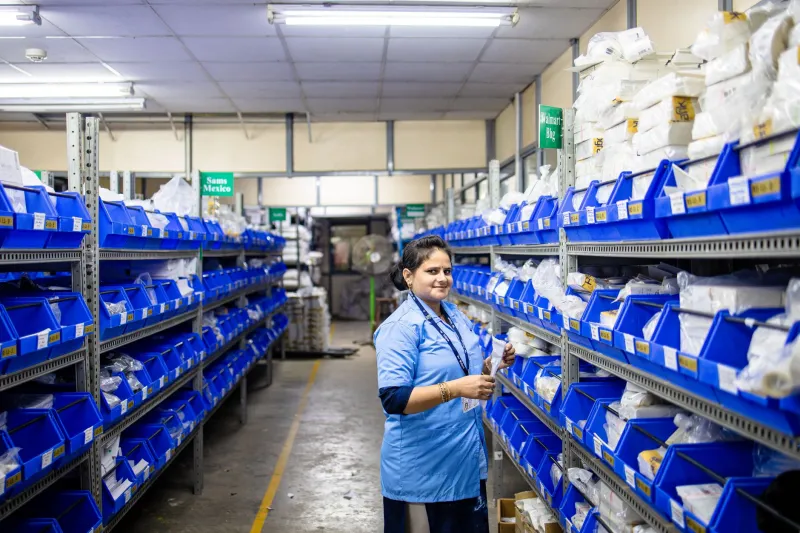
The revision stops at the drawing board
In many UK manufacturers, revision control is treated as a documentation exercise. Drawings are updated, specifications are reissued, purchase orders are amended and the ERP record is changed. Those steps are necessary, but they are not sufficient. The stores is a physical system as well as an information system. Bins, stillages, kanban cards, line-side racks, returned material, consignment stock and work-in-progress all carry assumptions about what is acceptable. When a standard revision lands, those assumptions can remain untouched.
The bin does not read the revision. It holds what was put there. If the shelf is not brought into the change, a revised clause can quietly re-enter the line through material that was never reviewed. As revision programmes for 2026 move through member organisations, this is a practical risk worth addressing directly.
Why stores is the weak point
Revision control often follows the document path: engineering releases a change, quality updates the control plan, purchasing contacts the supplier. The physical path is less linear. Material may be in a main stores location, an overflow rack, a line-side bin, a return-to-stores area, a subcontractor’s premises or a service parts cabinet. Labels may show a part number but not the standard revision, the batch status or the disposition decision. Shift handovers can pass on a verbal assumption that a bin is still usable.
The result is a gap between what the controlled documentation says and what the operative can physically pick. That gap is where a revised standard fails to take effect.
A stores-led protocol for revision roll-out
1. Build a revision impact map
Engineering and quality should translate the revised clause into stock-keeping units, material grades, finishes, treatments, test certificates and supplier references. Include not only finished components but also work-in-progress, line-side stock, returned material, spares and consignment stock. Agree a cut-off date and time for the change. Record the affected part numbers, locations, quantities where known, and the decision required. A simple register is sufficient, provided it is owned and reviewed.
2. Conduct a physical census
Walk the stores with the impact map in hand. Check main bins, overflow locations, quarantine areas, line-side racks, returns and service stores. Scan or record batch and lot references. Do not rely solely on the ERP location record. Mark affected stock with a clear hold tag and, where practicable, move it to a segregated area. Photograph the location and label so that the starting position is evidenced.
3. Apply disposition rules
Stores should not decide alone whether affected material can be used. Route the decision to engineering and quality. The options may include release against the previous revision for a defined build or contract, rework or re-labelling, return to supplier, scrap, or a formal concession. Record the rationale, the approver, the date and any limitation on use. Distinguish clearly between material that is fit for the current build and material that conforms to the revised standard. Verbal release should not be accepted.
4. Re-identify and segregate
Where material is released, label it with its revision status and any restriction on use. Where it is held, use a distinct tag and location that stores staff will recognise. Remove or deface old labels so that two identities cannot coexist on one bin. Update bin labels, kanban cards, pick lists and ERP location status. Brief stores at shift handover, not only by email.
5. Brief stores and production
A short toolbox talk should explain what changed, which stock is affected, what to do if affected material is found and who to contact. Use a one-page visual aid showing old and new labels. Include agency staff, shift cover, maintenance and returns teams. Confirm understanding with a sign-off sheet and place a notice at the affected locations.
6. Record the decision trail
Maintain a stock disposition log showing part number, batch, quantity, location, standard revision, decision, approver, date and supporting evidence. Link the entry to any nonconformance, concession or supplier return. This log is the audit evidence that revision control reached the shelf, not merely the drawing office.
7. Close the loop
Update purchasing and supplier schedules. Notify suppliers where stock is being returned or future deliveries must change. Sample-audit the affected locations after 30 days to confirm that labels, segregation and briefing have held. Add the stores check to the revision checklist so that future changes follow the same path.
Roles and boundaries
Stores owns the census, segregation, labelling and local records. Engineering owns the technical disposition. Quality owns approval, traceability and audit. Purchasing owns supplier communication. Production owns line-side and work-in-progress stock. The handoffs should be explicit, because a revision can fail in the gap between them.
Common failure modes
- Treating an ERP update as a stock update.
- Quarantining part of a batch and leaving the remainder in the pick face.
- Placing a new label over an old one without removing the previous identity.
- Allowing mixed bins after a revision.
- Overlooking work-in-progress, returns and service parts.
- Releasing material by verbal agreement.
- Briefing day shift but not nights, weekends or agency staff.
- Failing to set a cut-off date.
A member checklist
Before closing a revision, confirm that affected bins and batches have been identified, that hold or release decisions are approved and recorded, that labels and ERP status agree, that stores and production have been briefed, and that a follow-up audit is scheduled. The checklist need not be elaborate. It must be completed.
Conclusion
Revision control is a matter of custody as well as documentation. A standard change is complete only when the bin, the batch and the briefing agree. BEMSC encourages members to schedule a stores verification at the point of revision release and to retain the disposition record as part of the quality evidence. The shelf should not be the last place to hear about the change.