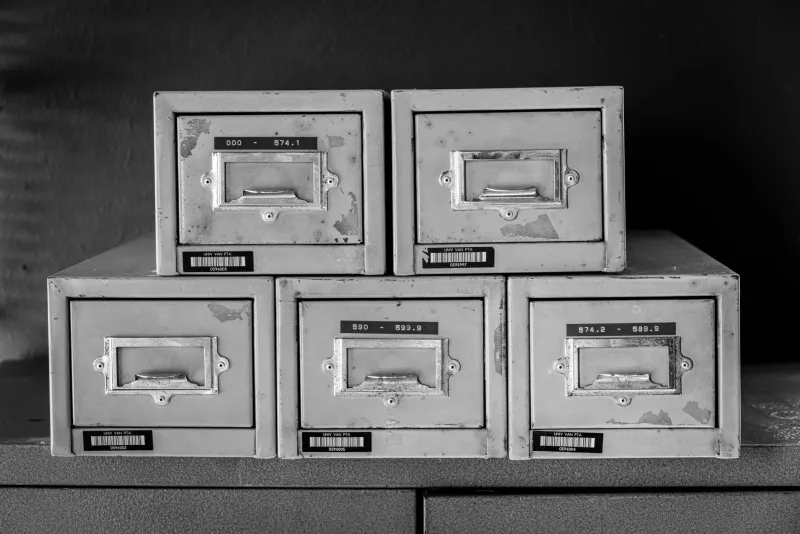
Custody, Not Circulation: A Board’s Guide to Standards Access

The question is seldom whether a UK manufacturer holds the relevant standard. It is whether the copy in use is licensed, current and recognisable to an auditor. In many SMEs, standards documents arrive through a patchwork of routes: a PDF forwarded by a customer, a printed extract left behind by a retiring engineer, a shared-drive folder named after a project that closed some years ago. None of this is dishonest. It is simply how access has grown. But as audit cycles tighten and contractual evidence demands become more explicit, that patchwork is a governance exposure, not a stationery matter.
Access is not administration
A standard is not merely reference material. It is a controlled document that supports conformity claims, tender responses, inspection plans and, in some cases, contractual obligations. When access is treated as an administrative overhead — something to be bought, copied and passed around — the organisation loses sight of three things: which copy is licensed, which version is live, and who is accountable for either question.
That loss of sight is rarely visible until it matters. A customer audit asks for the edition used at the time of manufacture. A notified body requests the technical file. A contract references a standard that has since been revised. At that point, the firm needs more than a document; it needs a defensible account of how that document was obtained, controlled and applied.
Where informal circulation creates formal risk
The risks are practical rather than theoretical. An unauthorised copy may be an older edition, missing amendments or national forewords. A printed extract may omit clauses that change the inspection regime. A shared folder may contain three versions with no indication of which one is approved for use. Individually, these look like housekeeping. Collectively, they undermine the traceability that quality systems and customer approvals depend on.
There is also a commercial dimension. Licensed access is how standards bodies fund the maintenance of the documents themselves. Informal circulation may feel efficient, but it weakens the ecosystem that keeps standards current and usable. For a membership organisation such as BEMSC, that is a community concern as much as a compliance one.
A licensed library, clearly owned
The alternative is not a vast bureaucracy. It is a small number of deliberate controls. The first is a licensed library: a defined set of standards access routes, whether through direct purchase, a subscription service or a member library arrangement. The second is ownership. Every controlled document should have a named custodian — a person, not a department — who is accountable for its licence status, storage and withdrawal.
The third is a register. A simple access register should record the standard identifier, title, edition, source of access, licence basis, custodian, location and review date. It need not be elaborate. It must be honest and current. If a document is held only as a printed copy, say so. If a digital copy is licensed to a named user, record that too.
Version control that survives turnover
Version control is where many well-intentioned systems fail. A standard is revised, a new edition is published, and the old copy remains on a shared drive because no one has been asked to remove it. The firm then operates with two truths: the register says one thing, and the shop floor says another.
The remedy is a controlled withdrawal routine. When an edition changes, the custodian should confirm the new copy is in place, mark the superseded copy as withdrawn, and communicate the change to the teams that use it. Where a contract or legacy product requires the older edition, that should be recorded as an exception with a defined end date. Exceptions are not failures; unrecorded exceptions are.
The board’s five questions
Standards access becomes a governance issue when the board can answer five questions without hesitation. First, which standards are relied upon for conformity, tender and contract work? Second, how is each one licensed and who holds the licence? Third, who is the named custodian for each controlled copy? Fourth, how are revisions identified and withdrawn? Fifth, what evidence would be produced if a customer or auditor asked for the version used on a specific job?
If any answer depends on an individual’s memory, the control is not yet robust. Boards do not need to manage documents directly, but they should require assurance that document access is controlled, reviewed and evidenced.
A practical checklist for members
- Define a single approved route for obtaining standards, and discourage informal forwarding as a substitute.
- Maintain an access register covering identifier, edition, licence source, custodian, location and review date.
- Name a custodian for each controlled document and record a deputy for absences.
- Store licensed digital copies in a controlled location with access rights that reflect the licence.
- Mark printed copies clearly as controlled or uncontrolled, and withdraw superseded prints.
- Run a quarterly check that the register matches the copies in use.
- Record legacy-edition exceptions with a reason and an end date.
- Include standards access in induction and refresher training for engineering, quality and procurement teams.
- Ask internal audit or quality assurance to sample one job file each year and trace the standard edition used.
What good looks like by the next audit
Good practice is unspectacular. A small register, a named custodian, a licensed copy in a controlled folder and a clear withdrawal note are enough to change the conversation. Instead of reconstructing access after the event, the firm can show a routine. That routine protects the organisation’s conformity claims, reduces the risk of working to superseded clauses and demonstrates to customers that document control is taken seriously.
The borrowed copy may have been convenient. The controlled copy is defensible. For UK manufacturers preparing for the 2026 audit season and beyond, that distinction belongs on the board agenda — not buried in a stationery order.